
The partnership between ADI Predictstreet and Kalshi to launch dedicated World Cup prediction markets marks a pivotal shift in how global sports liquidity is aggregated and traded. By leveraging Kalshi’s regulated exchange infrastructure, ADI Predictstreet is positioning itself to capture a significant share of the high-volume interest surrounding the FIFA World Cup. This move is particularly relevant for the broader ecosystem of blockchain betting and decentralized betting platforms, as it highlights a growing preference for exchange-style price discovery over traditional fixed-odds models.
Industry Impact: The Shift Toward Market Efficiency
The entry of sophisticated prediction market tools into the sports arena challenges the hegemony of traditional sportsbooks. In a standard sportsbook environment, the operator sets the price and captures a significant margin, often referred to as the ‘vig’ or ‘overround.’ Prediction markets, conversely, operate on an exchange model where participants trade against one another. This structure inherently promotes market efficiency, as prices fluctuate based on real-time capital flow and Bayesian reasoning updated with every match event or injury report.
For the international betting industry, this partnership represents a maturation of the asset class. As liquidity pools grow, the bid-ask spreads tighten, making it easier for high-volume traders to enter and exit positions without significant slippage. This environment is highly conducive to crypto sportsbooks and platforms that prioritize transparency and low-friction transactions. The integration of such markets allows for a more clinical assessment of Expected Value (+EV), as the market price is a direct reflection of collective intelligence rather than an operator’s defensive pricing strategy.
Regulatory and Technical Implications
Kalshi’s role as a CFTC-regulated designated contract market (DCM) provides a layer of institutional-grade oversight that many early-stage crypto prediction markets lack. This regulatory backbone is essential for attracting large-scale liquidity providers who require strict AML and KYC protocols to operate. For players who prioritize security, understanding the Bit.Score™ methodology used to evaluate platform integrity is crucial when navigating these emerging financial-sporting hybrids.
Technically, the scaling of these markets relies on robust API integrations and high-frequency data feeds. The ability to settle contracts near-instantaneously is a requirement for modern bettors. This demand for speed mirrors the trend seen in fast withdrawal crypto casinos, where the delay between a successful outcome and capital availability is minimized. As prediction markets become more integrated with blockchain technology, the use of smart contracts for automated settlement could further reduce counterparty risk and operational overhead.
The Player Perspective: Risk Management and Strategy
From a professional gambling standpoint, prediction markets are treated less like a game of chance and more like a high-volatility financial instrument. Success in these markets is not predicated on ‘intuition’ but on the rigorous application of probabilistic assessment and bankroll management. A disciplined trader will often utilize a fractional Kelly Criterion to determine position sizing, ensuring that variance does not lead to a total depletion of the betting reserve during inevitable market swings.
The transparency of these markets also aids in harm minimization. Because the odds are dictated by the market rather than an opaque algorithm, players can more easily identify when they are operating at a negative expectation (-EV). Furthermore, many high-tier platforms are adopting Responsible Gaming (RG) frameworks that use data analytics to monitor for signs of high-risk behavior, such as chasing losses or rapid increases in trade frequency. Those seeking a secure environment often look toward high trust crypto casinos that implement similar player protection standards.
Market Outlook: The Convergence of Betting and Trading
Looking ahead to the World Cup and beyond, the convergence of sports betting and financial trading appears inevitable. The success of ADI Predictstreet’s expansion will likely serve as a blueprint for other operators seeking to enter the international market. As provably fair casinos and blockchain-based platforms continue to gain traction, the demand for high-liquidity, transparent markets will only increase. This evolution benefits the sophisticated bettor who views money strictly as a tool for decision-making and a metric of analytical accuracy.
The international landscape—excluding restricted jurisdictions like Ontario and Portugal—is becoming increasingly receptive to these models. Operators who can provide a seamless bridge between traditional sports data and decentralized execution will likely dominate the next cycle of industry growth. For the ‘Bitruler’ persona, this represents the ultimate manifestation of gambling as a science: a world where the noise of the ‘hot streak’ is replaced by the quiet precision of the Expected Value calculation.
For players prioritizing fast crypto withdrawals, operational stability, and privacy-focused wagering environments, platforms such as Trusted Casino continue gaining traction among international bettors.
Frequently Asked Questions
What is the difference between a prediction market and a traditional sportsbook?
A prediction market operates as an exchange where participants trade contracts against each other, leading to prices driven by supply and demand. A traditional sportsbook sets fixed odds and acts as the house, usually including a higher margin or ‘vig’ in their pricing.
How does liquidity affect World Cup prediction markets?
Higher liquidity results in tighter bid-ask spreads and less price slippage. This allows larger bets to be placed without significantly moving the market price, making it more efficient for professional traders and high-volume participants.
Are these markets compatible with crypto betting?
Yes, many prediction markets are increasingly being built on blockchain infrastructure or integrated with crypto sportsbooks to allow for faster settlement, lower fees, and enhanced transparency through provably fair mechanisms.
Disclaimer: This news article is provided for informational and educational purposes only. The iGaming industry is subject to frequent regulatory changes.
Before engaging in any gaming activity, please consult our Responsible Gaming Guide and our Terms & Conditions.
Always gamble responsibly and within your limits.
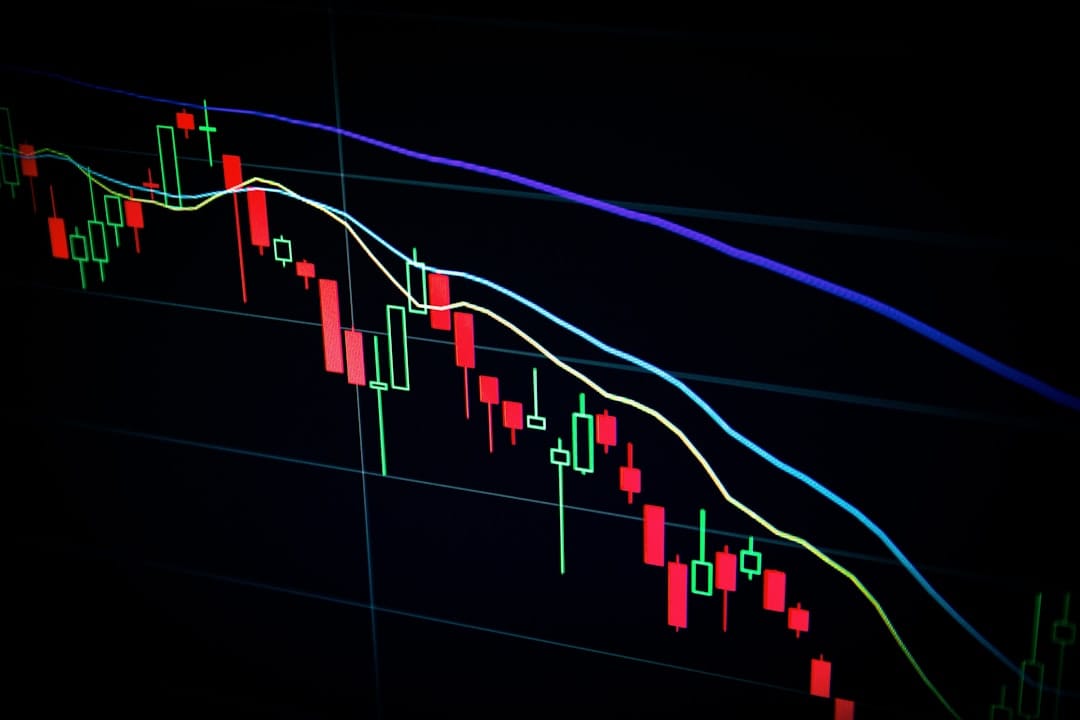
Photo by Maxim Hopman on Unsplash