

Game Info
2.3%
Advanced
Card Games
Introduction and History of Russian Poker
Russian Poker is one of the most intellectually stimulating and strategically deep variations of casino poker available today. Originating in the bustling casino scenes of Eastern Europe during the post-Soviet gaming boom of the 1990s, the game quickly captured the attention of high rollers and tactical players. Unlike traditional house-banked games where players have limited choices, Russian Poker grants participants an unprecedented level of control over their hands. Today, this captivating game has found a prominent home in the digital arena, particularly within modern crypto casinos, where Canadian players appreciate its high volatility and rich tactical depth.
For Canadian gaming enthusiasts looking to move beyond simple luck-based table games, Russian Poker offers a unique blend of Caribbean Stud mechanics and standard draw poker. Because players can buy extra cards or exchange their hand entirely, it requires active decision-making at every turn. This complexity makes it a favorite in the live dealer lobbies of top-tier platforms, where sophisticated software handles the intricate payouts and card exchanges in real-time.
Game Setup and Components
To master Russian Poker, one must first understand the layout of the table and the tools used during play. The game is played with a standard, single 52-card deck, which is thoroughly shuffled before every round. The physical or digital table layout resembles a blackjack or Caribbean Stud table, featuring several distinct betting areas for each player:
- Ante Box: The initial mandatory bet required to receive your starting cards.
- Bet (or Play) Box: The area where you place your main wager if you choose to challenge the dealer’s hand.
- Bonus Box: An optional side-bet circle where players can wager on obtaining high-ranking poker hands on the initial deal.
In addition to the betting circles, understanding card values is straightforward: aces can rank high or low, and standard poker hand rankings apply—ranging from a simple High Card up to the coveted Royal Flush. Understanding how these hands are evaluated is crucial, especially when looking to transition to more advanced tactical variants detailed in our academy guides.
Step-by-Step Rules (Gameplay)
The flow of a Russian Poker round is dynamic and involves several decision points. Here is the step-by-step breakdown of how a round unfolds:
Step 1: Placing the Ante and the Deal
To begin, players must place a wager in the Ante box. At this stage, they may also place a side bet in the Bonus box. The dealer then distributes five cards face down to each player and five cards to themselves. The dealer’s final card is flipped face up, providing crucial information that players must use to calculate their next move.
Step 2: Assessing the Options
After examining their five cards and seeing the dealer’s single face-up card, players have five primary choices:
- Fold: The player forfeits their hand and loses their Ante bet.
- Bet (Play): The player believes their hand can beat the dealer. They must place an additional bet exactly equal to twice (2x) the Ante in the Bet box.
- Buy a Sixth Card: For the cost of one Ante (1x), the player can buy an additional card from the deck. After receiving this sixth card, the player must decide whether to Fold or Bet (Play) at 2x Ante.
- Exchange Cards: For the cost of one Ante (1x), the player can discard up to five cards and receive new ones. If they choose to exchange only one card, they are allowed to buy a second exchange if they are still unsatisfied, though this requires another payment. Once the exchange is complete, the player must decide to Fold or Bet (Play).
Step 3: Dealer Qualification and the “Double Combination” Rule
Once all active players have placed their Play bets, the dealer reveals their remaining four cards. To “qualify,” the dealer must hold a hand of at least Ace-King (A-K) or better. Depending on the dealer’s qualification, different scenarios occur:
- If the Dealer Does Not Qualify: The player wins even money (1:1) on their Ante bet, and the Play bet is returned as a push. Alternatively, the player can pay a fee equal to their Ante to force the dealer to replace their highest card with a new one from the deck, attempting to make the dealer qualify.
- If the Dealer Qualifies and Wins: The player loses both their Ante and Play bets.
- If the Dealer Qualifies and Loses: The player’s Play bet is paid out according to the standard payout table (e.g., Flush pays 5:1, Full House pays 7:1, etc.), while the Ante bet is returned as a push.
A highly unique aspect of Russian Poker is the Double Combination rule. If a player holds a hand that beats the dealer, and they also possess a secondary distinct poker combination within their cards (made possible by buying a 6th card or exchanging), they are paid out for *both* combinations, provided at least one of the combinations is higher than the dealer’s hand!
Advanced Strategies and Winning Tips
Russian Poker is not a game of passive luck; it requires a mathematical approach. Because you can alter your hand, knowing when to buy a card or swap cards is the key to lowering the house edge. If you are comparing different platforms to find the best table rules, check out our crypto casino comparator for optimal payouts.
When to Buy a Sixth Card
Buying a sixth card is highly recommended when you are one card away from a premium hand, such as a Flush or a Straight (known as a four-card draw). It is also highly profitable to buy a sixth card when you already have a strong hand like Three of a Kind, as it gives you a solid opportunity to hit a Full House or a Four of a Kind, or to trigger the lucrative double combination rule.
When to Exchange
Do not discard cards recklessly. You should generally only exchange cards if you have no made hand (not even a pair) and are missing a draw, or if you hold a single high card matching the dealer’s weak upcard. If you hold a pair, it is statistically better to keep the pair and play rather than breaking it up to chase a straight or flush.
Forcing the Dealer to Qualify
If you hold an incredibly strong hand (such as a Full House or higher) and the dealer fails to qualify, pay the Ante fee to exchange the dealer’s highest card. Forcing the dealer to qualify is the only way to get paid on your massive hand instead of just taking a 1:1 payout on your original Ante.
Common Mistakes to Avoid
Many novice players carry strategies from Caribbean Stud or Texas Hold’em over to Russian Poker, which can be a costly error. Avoid these common pitfalls:
- Over-exchanging: Constantly paying 1x Ante to exchange three or four cards in search of a miracle hand will rapidly deplete your bankroll. Only exchange when the mathematical probability favors the draw.
- Ignoring the Dealer’s Upcard: The dealer’s single visible card is a major indicator. If the dealer shows an Ace or King, their qualification probability increases dramatically, and you should adjust your betting threshold accordingly.
- Forgetting the Double Combination Rule: Always inspect your sixth card carefully. Sometimes players overlook a secondary Ace-King combination or a small straight hidden within their six cards, missing out on massive payouts. For the latest industry insights on gaming strategies, keep an eye on our news-hub updates.
Conclusion
Russian Poker stands out as a true connoisseur’s casino game. Offering unmatched player agency, the ability to buy and exchange cards, and the thrilling prospect of double combination payouts, it rewards strategic discipline and sharp mathematical thinking. For Canadian players seeking an engaging experience at online crypto casinos, learning the nuances of Russian Poker is a highly rewarding endeavor that elevates the standard table game format to an entirely new level.
Frequently Asked Questions
What is the minimum qualifying hand for the dealer in Russian Poker?
The dealer must have a hand of at least Ace-King (A-K) or higher to qualify. If the dealer’s hand is weaker than this, they do not qualify, and special payout rules apply unless the player chooses to buy the dealer a new card.
How does the Double Combination rule work?
If a player beats the dealer’s qualified hand, they can be paid for two separate poker combinations contained within their cards. To win both payouts, at least one of the player’s combinations must beat the dealer’s hand, and the second combination must contain at least one card not used in the first combination.
Can I play Russian Poker with Bitcoin or other cryptocurrencies?
Yes, Russian Poker is highly popular at modern crypto casinos. Playing with crypto often offers faster transaction speeds, enhanced privacy, and lower transaction fees for Canadian players.
Join now with exclusive sign up bonus at our most trusted platform Wild.io
Russian Poker Key Indicators
| Indicator | Value / Level |
|---|---|
| House Edge | ~2.3% to 4.9% (depending on strategy) |
| RTP (Return to Player) | 95.1% – 97.7% |
| Volatility | High |
| Hit Frequency | Medium |
| Max Win | 100:1 or higher (via Double Combinations/Side Bets) |
| Skill Factor | High |
| Bonus Frequency | Medium |
Disclaimer: Before you start playing, it is essential to understand the risks involved. This guide is for educational purposes only.
Please read our full Responsible Gaming Guide and Terms & Conditions before placing any bets.
Never gamble more than you can afford to lose.
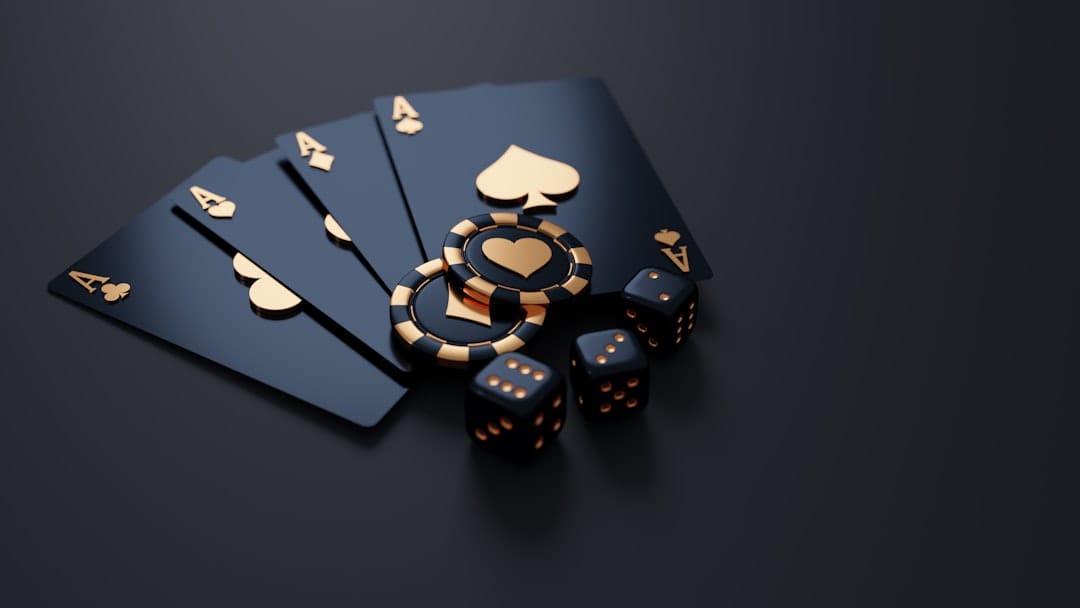
Photo by Eyestetix Studio on Unsplash