

Game Info
3.37%
Beginner
Card Games
Introduction and History of Three Card Poker
Three Card Poker has established itself as one of the most popular and enduring table games in both physical and virtual casinos worldwide. For Canadian players seeking a fast-paced, highly engaging card game that combines the suspense of classic poker with the straightforward simplicity of casino table games, Three Card Poker is the ultimate choice. Today, with the rapid rise of digital currencies, this classic has found a dominant new home in modern crypto casinos. If you are ready to find the absolute best platforms to enjoy this game, check out our home page for trusted casino reviews.
The history of Three Card Poker is relatively recent compared to centuries-old games like Blackjack or Baccarat. The game was invented in 1994 by Derek Webb, a British poker player who wanted to create a game that combined the excitement of traditional poker with the rapid pace of casino table games. Webb wanted to ensure three key factors: easy-to-understand rules, attractive payout ratios for winning hands, and a house edge that would satisfy both players and casino operators. By 1997, the game was patented and quickly swept through Las Vegas, eventually becoming a staple across Canadian casinos from Montreal to Vancouver. Today, Canadian crypto players favor Three Card Poker for its transparency, high RTP, and quick rounds, making it a stellar option for wagering digital assets.
Game Setup and Components
Before diving into the gameplay, it is crucial to understand the physical and digital components of Three Card Poker. The game is played on a standard blackjack-style semicircular table. Whether you are playing on a traditional felt or a sleek crypto casino interface, the table layout remains identical.
The Deck and Betting Areas
Three Card Poker is played with a single, standard 52-card deck. At virtual crypto casinos, the deck is shuffled automatically by a Provably Fair algorithm after every single round, ensuring absolute transparency. On the table layout in front of each player, you will see three distinct betting areas:
- Ante: This is the initial mandatory bet required to receive cards and play against the dealer.
- Play: This is the secondary bet placed after the player evaluates their three cards, matching the amount of the original Ante.
- Pair Plus: An optional side bet that pays out solely based on the strength of the player’s three cards, completely independent of the dealer’s hand.
Hand Rankings in Three Card Poker
Because you are only dealt three cards, the traditional hands of poker are slightly modified. Most notably, a Straight ranks higher than a Flush. This is because mathematically, it is harder to get a three-card straight than a three-card flush. Here is the official hand ranking from highest to lowest:
- Straight Flush: Three consecutive cards of the same suit (e.g., 5, 6, 7 of Hearts).
- Three of a Kind: Three cards of the same rank (e.g., three Queens).
- Straight: Three consecutive cards of mixed suits (e.g., 8 of Spades, 9 of Clubs, 10 of Diamonds).
- Flush: Three non-consecutive cards of the same suit (e.g., Ace, 4, 8 of Clubs).
- Pair: Two cards of equal rank (e.g., two Jacks).
- High Card: The highest-ranking card in your hand when no combination is made.
Step-by-Step Rules (Gameplay)
Learning how to play Three Card Poker is remarkably simple. Each hand can be broken down into clear, structured steps, allowing beginners to master the flow of the game within a few minutes.
Step 1: Placing the Bets
To begin a round, you must place your bet on the Ante circle. At this stage, you also have the option to place a separate bet on the Pair Plus spot. If you are playing with cryptocurrencies like Bitcoin or Ethereum, you will simply select your chip denomination and click the respective betting zones.
Step 2: The Deal
Once bets are locked in, the dealer distributes three cards face down to each player and three cards face down to themselves. At online crypto tables, your cards will instantly be revealed to you, while the dealer’s cards remain hidden.
Step 3: The Player’s Decision
Now, you must look at your three cards and make a choice. You have two options:
- Fold: If you believe your hand is too weak, you can fold. By folding, you surrender your cards and forfeit your Ante bet (and your Pair Plus bet, if active).
- Play: If you want to challenge the dealer’s hand, you must place a Play bet. This bet must be of equal value to your original Ante bet.
Step 4: The Showdown and Dealer Qualification
After all players have made their decisions, the dealer turns over their three cards. For the game to proceed normally, the dealer’s hand must “qualify.” The dealer qualifies if their hand contains a Queen or higher.
The outcome of the hand is determined by whether the dealer qualifies, and who has the superior hand:
- If the Dealer Does Not Qualify: The player wins even money (1:1) on their Ante bet, and the Play bet is returned to the player as a push (no money is won or lost on the Play bet).
- If the Dealer Qualifies and the Player Wins: Both the Ante and Play bets pay even money (1:1).
- If the Dealer Qualifies and Wins: The dealer takes both the Ante and Play bets.
- If the Dealer Qualifies and Ties: Both bets push, and all chips are returned to the player.
The Ante Bonus
To reward exceptionally strong hands, players receive an “Ante Bonus” payout if they hold a Straight, Three of a Kind, or Straight Flush. This bonus is paid out regardless of whether the dealer qualifies or even beats the player’s hand. Payouts typically range from 1:1 for a Straight, 4:1 for Three of a Kind, to 5:1 for a Straight Flush.
Advanced Strategies and Winning Tips
While luck plays a significant role in any casino game, implementing a rigorous statistical strategy will dramatically lower the house edge. To deepen your understanding of casino probabilities, check out our comprehensive strategies and learning section.
The Queen-6-4 Strategy
The optimal strategy for Three Card Poker is mathematically simple and incredibly easy to memorize. It is called the Queen-6-4 rule. According to extensive computer simulations, you should play the hand (make the Play bet) if you hold a Queen, a 6, and a 4 or better. If your hand is lower than Q-6-4, you should fold.
Here is how to apply the Q-6-4 strategy in real-time:
- If your highest card is a King or an Ace, always play, regardless of the other two cards.
- If your highest card is lower than a Queen (e.g., Jack-high, 10-high), always fold.
- If your highest card is a Queen, look at your second-highest card. If it is higher than 6, play. If it is lower than 6, fold.
- If your highest card is a Queen and your second card is exactly a 6, look at your third card. If it is 4 or higher, play. If it is lower than 4 (e.g., Q-6-3, Q-6-2), fold.
By strictly adhering to the Q-6-4 strategy, you can minimize the house edge to roughly 3.37% on the Ante bet.
The Reality of the Pair Plus Bet
The Pair Plus side bet is highly appealing because it offers large payouts (often up to 40:1 for a Straight Flush). However, from a strategic standpoint, the house edge on the Pair Plus bet is significantly higher (typically around 7.28%). If you are playing to maximize your long-term returns in a crypto casino, it is best to avoid or minimize the Pair Plus bet and focus on the main Ante/Play game. To see how different crypto platforms structure these payout tables, refer to our crypto casinos comparison engine.
Common Mistakes to Avoid
Even seasoned table game players can fall prey to easily avoidable mistakes when sitting down at a Three Card Poker table. Staying updated with igame recent insights by The Bitruler can help you stay ahead of the game, but here are the immediate traps to avoid:
- Playing Every Hand: Many players dislike folding because they feel like they are wasting opportunities. Folding weak hands is the single most important habit for preserving your bankroll.
- Ignoring the Dealer Qualification Rule: Remember that if the dealer does not hold a Queen or better, your Play bet only pushes. Do not assume you will win massive payouts on the Play bet just because you stayed in the hand; the dealer must qualify for that bet to pay out.
- Over-betting on Side Bets: The thrill of a Pair Plus win is undeniable, but consistent betting on this option will drain your balance far quicker than the base game.
- Misunderstanding Hand Rankings: Never forget that a Straight beats a Flush in Three Card Poker. Playing under the assumption of standard 5-card poker rankings can lead to costly errors in your betting decisions.
Conclusion
Three Card Poker offers the perfect balance of low difficulty, rapid gameplay, and the thrill of strategic card decision-making. By applying the Q-6-4 strategy and managing your bankroll wisely, you can enjoy one of the most exciting table games the casino world has to offer. In the landscape of Canadian online gambling, crypto casinos have elevated this classic game by offering Provably Fair mechanics, instant payouts, and stellar digital asset integration.
Frequently Asked Questions
What is the minimum qualifying hand for the dealer in Three Card Poker?
The dealer must have a hand containing a Queen or higher to qualify. If the dealer does not qualify, the player’s Ante bet pays 1:1, and the Play bet is returned as a push.
Why is a straight ranked higher than a flush in Three Card Poker?
In a three-card deck, it is mathematically rarer and more difficult to draw a Straight than a Flush. Because of these mathematical odds, the traditional ranking is inverted for Three Card Poker.
Can I play Three Card Poker with cryptocurrency in Canada?
Yes, many top-tier crypto casinos cater specifically to the Canadian market, allowing players to deposit, wager, and withdraw in popular cryptocurrencies like Bitcoin, Ethereum, and Litecoin with excellent security.
Play now with exclusive sign up bonus at 7Bit Casino
Game Indicators and Key Metrics
| Indicator | Value / Description |
|---|---|
| House Edge | 3.37% (Ante/Play using Q-6-4 Strategy) / 7.28% (Pair Plus) |
| RTP (Return to Player) | 96.63% (Base Game) / 92.72% (Pair Plus) |
| Volatility | Medium |
| Hit Frequency | ~25.6% for Pair Plus / ~48% for Ante/Play wins |
| Max Win | Typically 40:1 (Pair Plus Straight Flush) or 100:1 (on specific modern progressive jackpots) |
| Skill Factor | Medium (Applying the Q-6-4 decision rule) |
| Bonus Frequency | Low-Medium (Ante Bonus occurs roughly in 1 out of every 10 hands) |
Disclaimer: Before you start playing, it is essential to understand the risks involved. This guide is for educational purposes only.
Please read our full Responsible Gaming Guide and Terms & Conditions before placing any bets.
Never gamble more than you can afford to lose.
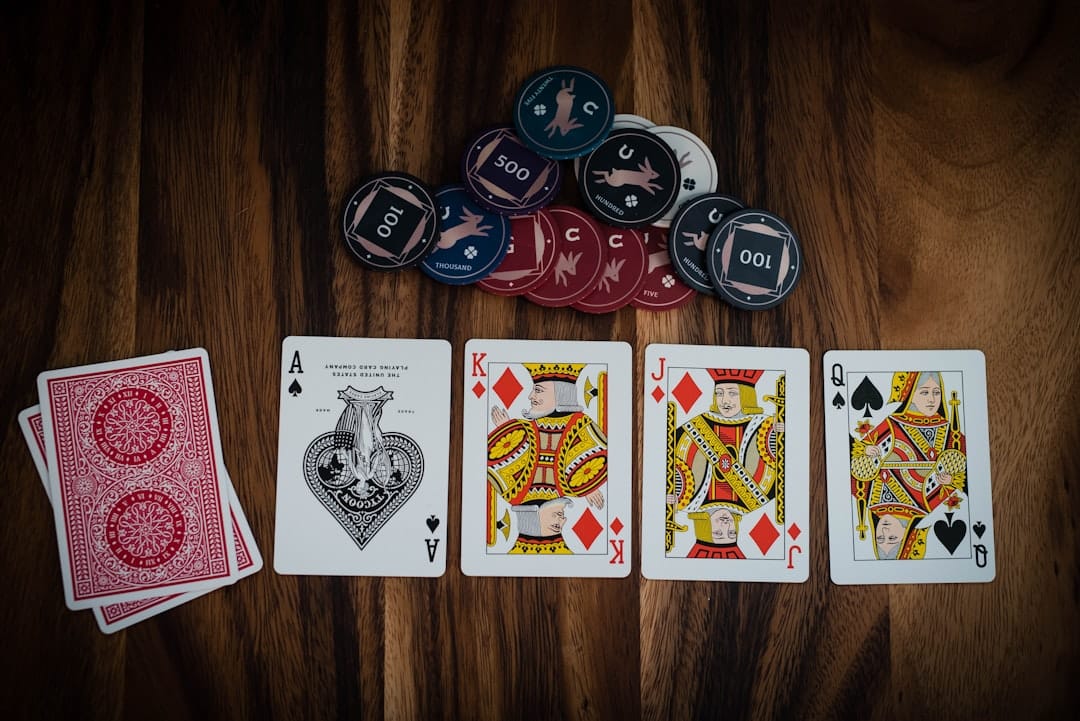
Photo by Dylan Clifton on Unsplash