
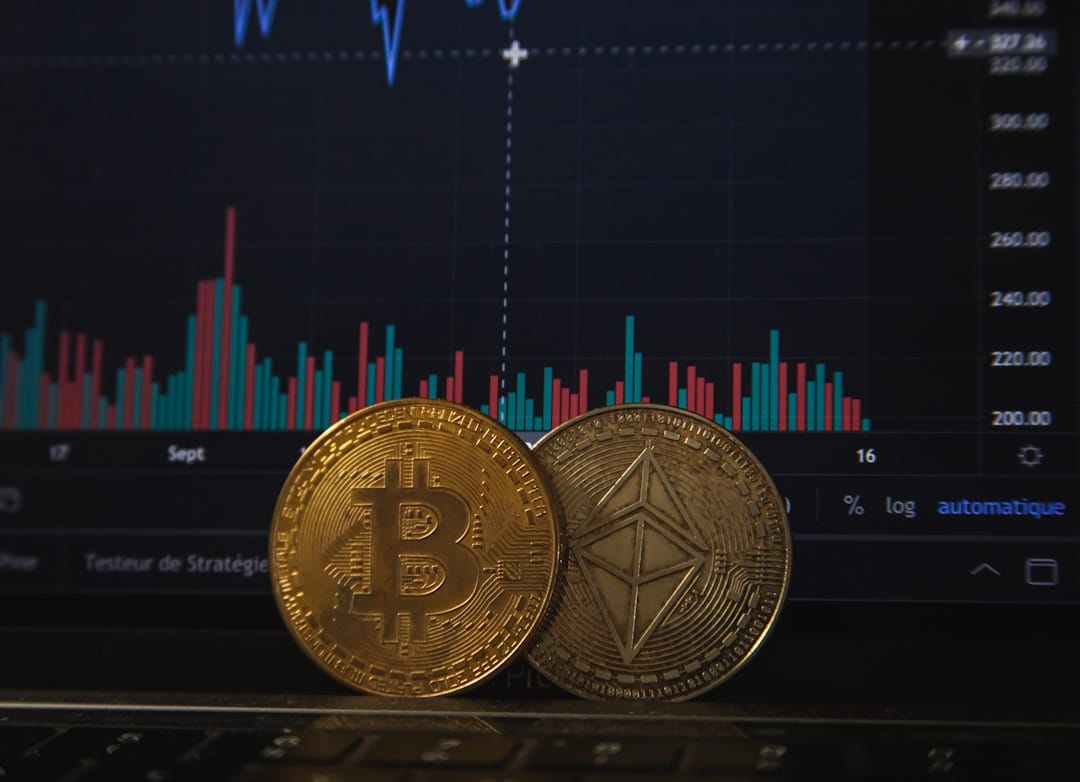
The landscape of global sports wagering is undergoing a structural transition driven by decentralized finance (DeFi) and cryptographic protocols. This evolution is highlighted by a recent $100 million capital injection into the prediction market protocol ‘Rain’ ahead of its highly anticipated World Cup V2 launch. This capital influx underscores a broader macroeconomic migration: high-volume bettors and institutional liquidity providers are increasingly bypassing traditional, high-margin bookmakers in favor of decentralized, high-efficiency alternatives.
For analytical players who view wagering strictly through the lens of mathematical expectation (+EV) and capital efficiency, this development represents a major milestone. Increased liquidity directly correlates with tighter bid-ask spreads, reduced slippage, and more accurate pricing of probabilities. Consequently, the utility of decentralized prediction networks and modern trusted casinos is expanding beyond simple speculative vehicles into sophisticated financial markets.
Industry Impact: Liquidity and Market Efficiency
In traditional sportsbooks, the house edge is maintained through a built-in margin, often referred to as the ‘juice’ or ‘vig.’ This structural tax guarantees a negative mathematical expectation (-EV) for the average participant over a statistically significant sample size. Conversely, decentralized prediction markets operate on automated market maker (AMM) models or peer-to-peer order books. By eliminating the intermediary, these platforms can theoretically offer near-zero margin pricing, shifting the distribution of value back to the player.
The $100 million injection into Rain’s ecosystem resolves the primary historical bottleneck of decentralized wagering: liquidity. Without deep liquidity pools, large wagers distort market prices, creating unfavorable execution rates. With this capital commitment, high-net-worth individuals and syndicates can deploy advanced strategies and learning models, execution algorithms, and fractional Kelly Criterion bankroll management models without causing massive variance in market odds. This brings sports prediction closer to the efficiency levels observed in traditional financial derivatives markets.
Regulatory and Technical Implications
From a technical perspective, the architecture of next-generation crypto casinos comparison platforms and prediction networks relies heavily on smart contract execution and decentralized oracles. These technologies ensure automated, trustless settlement of wagers, eliminating the counterparty risk inherent in centralized platforms. When a sporting event concludes, API-driven oracles retrieve the official data, triggering the smart contract to distribute payouts immediately.
However, this technological paradigm faces ongoing regulatory scrutiny. Traditional licensing frameworks are structurally ill-equipped to handle peer-to-peer, non-custodial protocols. While centralized crypto gambling operators must navigate complex KYC (Know Your Customer) and anti-money laundering (AML) compliance protocols, fully decentralized prediction markets often operate in a regulatory grey area. For international markets, particularly in regions like Canada, the focus is shifting toward establishing robust player protection frameworks that can coexist with blockchain-based systems. Implementing provably fair gaming algorithms and transparent reserves remains crucial for securing long-term operational viability and maintaining user trust.
The Player’s Perspective: Managing Variance and Risk
For the professional bettor, the launch of World Cup V2 on a highly liquid decentralized platform demands a clinical approach to risk. Short-term outcomes in sports are highly volatile, meaning that even mathematically sound, +EV decisions can result in immediate losses due to natural variance. To survive these inevitable downswings, players must separate the quality of their decision-making from the immediate outcome—a concept fundamental to professional risk management.
Accessing these markets via blockchain casinos also changes how players manage their capital. Fast, non-custodial withdrawals allow for dynamic bankroll allocation across different platforms, maximizing capital efficiency. However, the absence of centralized safety nets means that players must take absolute personal responsibility for their security, utilizing hardware wallets, verifying smart contract permissions, and strictly adhering to predefined loss limits to mitigate systemic risk.
Market Outlook
As the boundaries between decentralized prediction markets, traditional sports betting, and blockchain casinos continue to blur, the industry is moving toward a hybrid model. Platforms that successfully combine the user-friendly interface of centralized operators with the transparency, speed, and low fees of decentralized protocols are poised to capture significant market share. The $100 million commitment to Rain is not merely a temporary speculative trend; it is a clear indicator that the future of global wagering will be built on public ledgers, driven by mathematical precision and cryptographic trust.
Join now with exclusive sign up bonus at our most trusted platform Wild.io
Frequently Asked Questions
What are decentralized prediction markets?
Decentralized prediction markets are peer-to-peer platforms built on blockchain technology that allow users to trade shares on the outcomes of future events, using smart contracts instead of a centralized bookmaker to hold funds and settle payouts.
How does liquidity affect sports betting odds?
Higher liquidity reduces the bid-ask spread and prevents large wagers from significantly altering the odds. This results in more stable, fair, and mathematically accurate pricing for bettors, allowing for better execution of +EV strategies.
Are blockchain casinos safer than traditional online casinos?
Blockchain casinos offer superior transparency through provably fair gaming algorithms and public ledger transactions, which eliminate counterparty risk. However, players must practice rigorous personal security, as decentralized platforms lack traditional customer support recovery options.
Disclaimer: This news article is provided for informational and educational purposes only. The iGaming industry is subject to frequent regulatory changes.
Before engaging in any gaming activity, please consult our Responsible Gaming Guide and our Terms & Conditions.
Always gamble responsibly and within your limits.
Photo by Pierre Borthiry – Peiobty on Unsplash